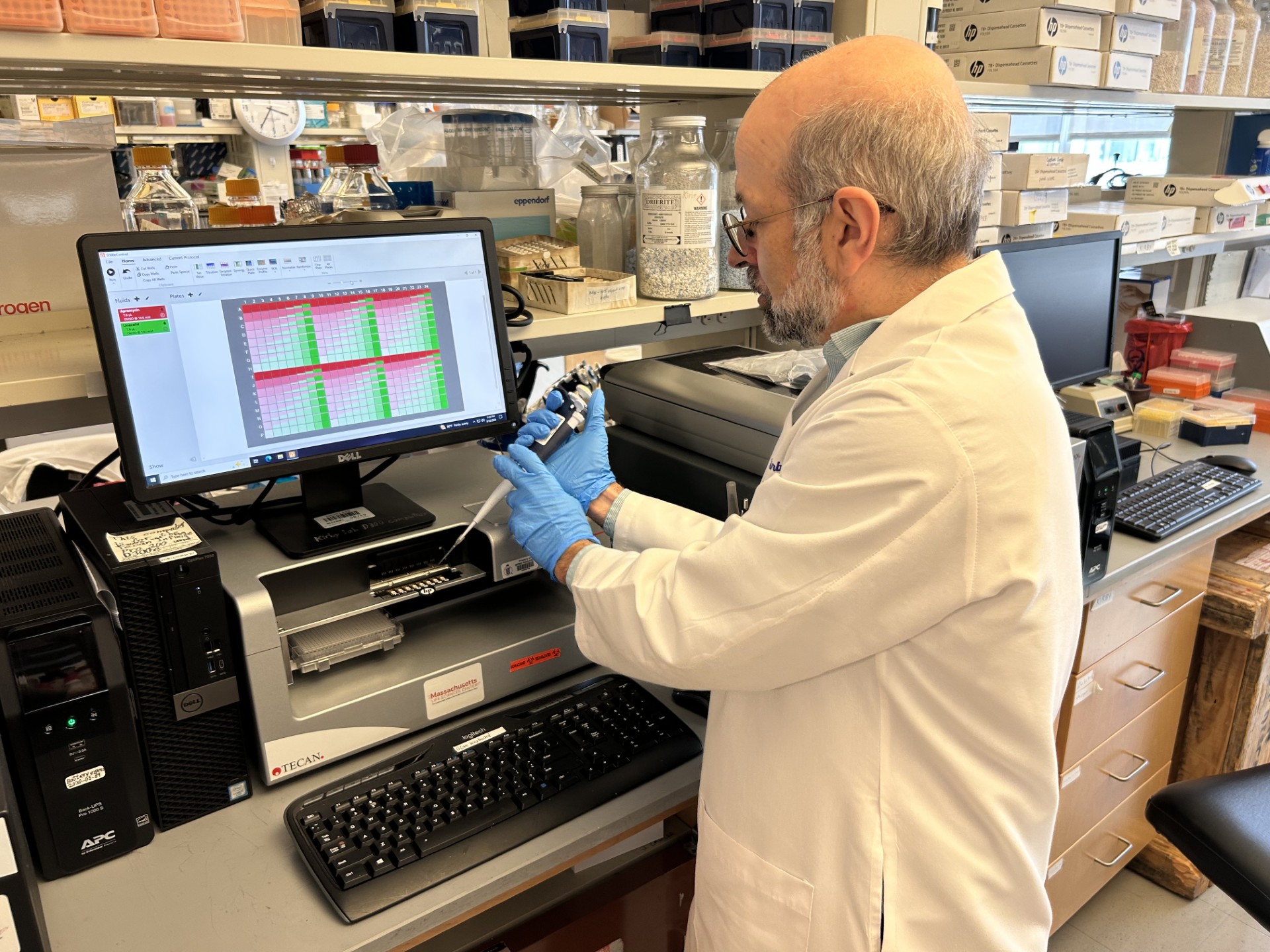
For patients living with severe drug-resistant lung infections, treatment options can be limited and outcomes uncertain. Through strategic investments in research and innovation, the MLSC is helping researchers develop new tools and therapies to address some of the most challenging infectious diseases facing patients today.
At Beth Israel Deaconess Medical Center (BIDMC), Dr. James Kirby, Director of the Clinical Microbiology Laboratory and Principal Investigator in the Experimental Pathology Division, is leading efforts to improve the diagnosis and treatment of Mycobacterium abscessus, a highly drug-resistant bacterium that can cause severe and often life-threatening lung disease.
Supported by an award through the Novel Therapeutics Delivery program, now part of the MLSC’s Accelerating Research through Collaboration (ARC) Awards, Dr. Kirby and his team have combined cutting-edge laboratory technologies with large-scale antibiotic testing to identify new therapeutic approaches for patients with few effective treatment options.
Using MLSC-funded equipment and laboratory infrastructure, the team evaluated hundreds of antibiotics and antibiotic combinations to uncover new strategies for combating drug-resistant infections that can cause severe lung disease. Their research identified several promising oral drug combinations and found that azithromycin, a widely used antibiotic that often loses effectiveness against resistant infections, could regain activity when combined with other therapies. The team also demonstrated the potential of apramycin, a novel antibiotic that may offer a safer treatment option while maintaining strong activity against the pathogen.
Beyond these treatment discoveries, the MLSC’s investments helped establish advanced diagnostic and testing capabilities at BIDMC, including next-generation sequencing and innovative laboratory technologies designed to rapidly evaluate antibiotic effectiveness.
These tools have helped researchers identify previously unrecognized mechanisms of antibiotic resistance, respond more quickly to emerging infectious threats, and accelerate the development of personalized treatment strategies for patients with limited
therapeutic options.
This work has also generated significant follow-on impact, helping secure additional funding from the National Institutes of Health (NIH) while fostering collaborations with industry partners. Together, these partnerships are helping translate scientific discoveries into practical solutions that can improve patient care and advance the fight against antimicrobial resistance.
“The impact of MLSC funding has extended well beyond the initial projects it supported,” said Dr. James Kirby, Director of the Clinical Microbiology Laboratory and Principal Investigator in the Experimental Pathology Division, Beth Israel Deaconess Medical Center. “It allowed us to establish research capabilities that have led to new therapeutic discoveries, additional federal funding, and collaborations with academic and industry partners, while advancing better treatments for patients with difficult-to-treat infections.”
Building on this momentum, the MLSC recently provided additional support through its Frontiers program to advance Dr. Kirby’s work on severe lung infections caused by nontuberculous mycobacteria. By supporting both groundbreaking research and the infrastructure needed to sustain it, the MLSC is helping expand Massachusetts’ leadership in infectious disease innovation while creating new opportunities to develop more effective treatments for patients facing some of the most difficult-to-treat respiratory infections.
Applications for the ARC Awards are open until Nov. 6, 2026 at 1 p.m. EST. Click here to learn more and apply today.