The Massachusetts Life Sciences Center (MLSC) is proud to support shared research infrastructure that strengthens discovery, collaboration, and commercialization across the Commonwealth.
One example is the Crimson Core at Brigham and Women’s Hospital (BWH), led by Drs. Lynn Bry and Georg Gerber, which received $3.3 million in 2022 through the MLSC’s Research Infrastructure program. This investment supported a critical resource available to researchers across Massachusetts, providing high-quality biofluid samples and specialized processing services that advance research studies, clinical trials, and translational science through the purchase of computational hardware, an Oxford Nanopore sequencer, updated gnotobiotic mouse equipment, and Bruker NMR probes.
Since receiving MLSC support, the Crimson Core has handled nearly 1,000,000 biospecimens, with more than 700,000 released to enable research, demonstrating the scale and statewide impact of this shared scientific infrastructure. The impact extends beyond academia and into commercialization.
For an early-stage company like Nanopath, this access was transformational. Nanopath, a 2023 awardee of the MLSC’s Massachusetts Next Generation (MassNextGen) Initiative, is a Series A-stage diagnostics company rethinking how diagnostic testing is delivered in clinical settings by delivering actionable molecular results within a single office visit. The company is currently pioneering a novel platform for women’s health designed to enable faster test results to improve the diagnosis of infectious diseases where speed and accuracy are critical.
Through resources provided by the Crimson Core, Nanopath was able to advance development of its diagnostic platform by accessing hundreds of well-characterized patient biospecimens and the expertise needed to better understand gold-standard diagnostic workflows. This work helped the company generate critical validation data and refine how its technology could integrate into real-world clinical practice.
“We were immersed in academic research environment, connected with leading clinicians at BWH, and exposed to state-of-the-art diagnostic technology,” said Drs. Alison Burklund and Amogha Tadimety, Nanopath. “The first time we walked into the lab, we were in awe of the capabilities.”
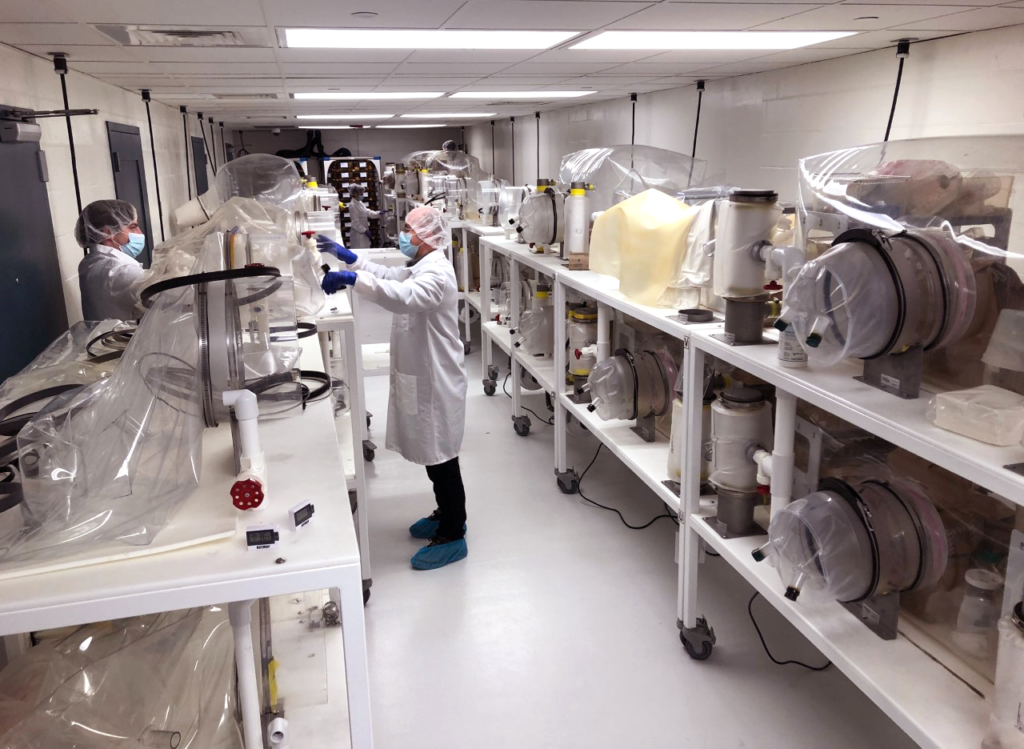
The ability to work with fresh clinical samples, avoid the cost barriers of commercial biobanks, and collaborate directly within the academic and clinical environment at BWH accelerated both technical validation and strategic decision-making. This helped Nanopath generate key data for the company’s research and refine their strategy on how its technology could integrate into existing clinical practices.
Since engaging with the Crimson Core, Nanopath has raised more than $20 million in follow-on funding and received FDA Breakthrough Device Designation for its diagnostic targeting complicated urinary tract infections. Additionally, the company has received non-dilutive funding and business strategy coaching from industry experts through the MassNextGen Initiative, along with support through the MLSC’s Internship Challenge, which has enabled the hiring of 10 interns since 2022.
Together, MLSC-supported research infrastructure and programming for early-stage companies has driven Nanopath’s development momentum, underscoring the role of shared resources like the Crimson Core in translating scientific innovation into real-world impact for patients and enabling faster transitions from discovery to impact.